AQUAMONIA
Aqueous ammonia in two concentrations, for fertilization and industrial processes. Plant target: 16,000 tonnes per year.
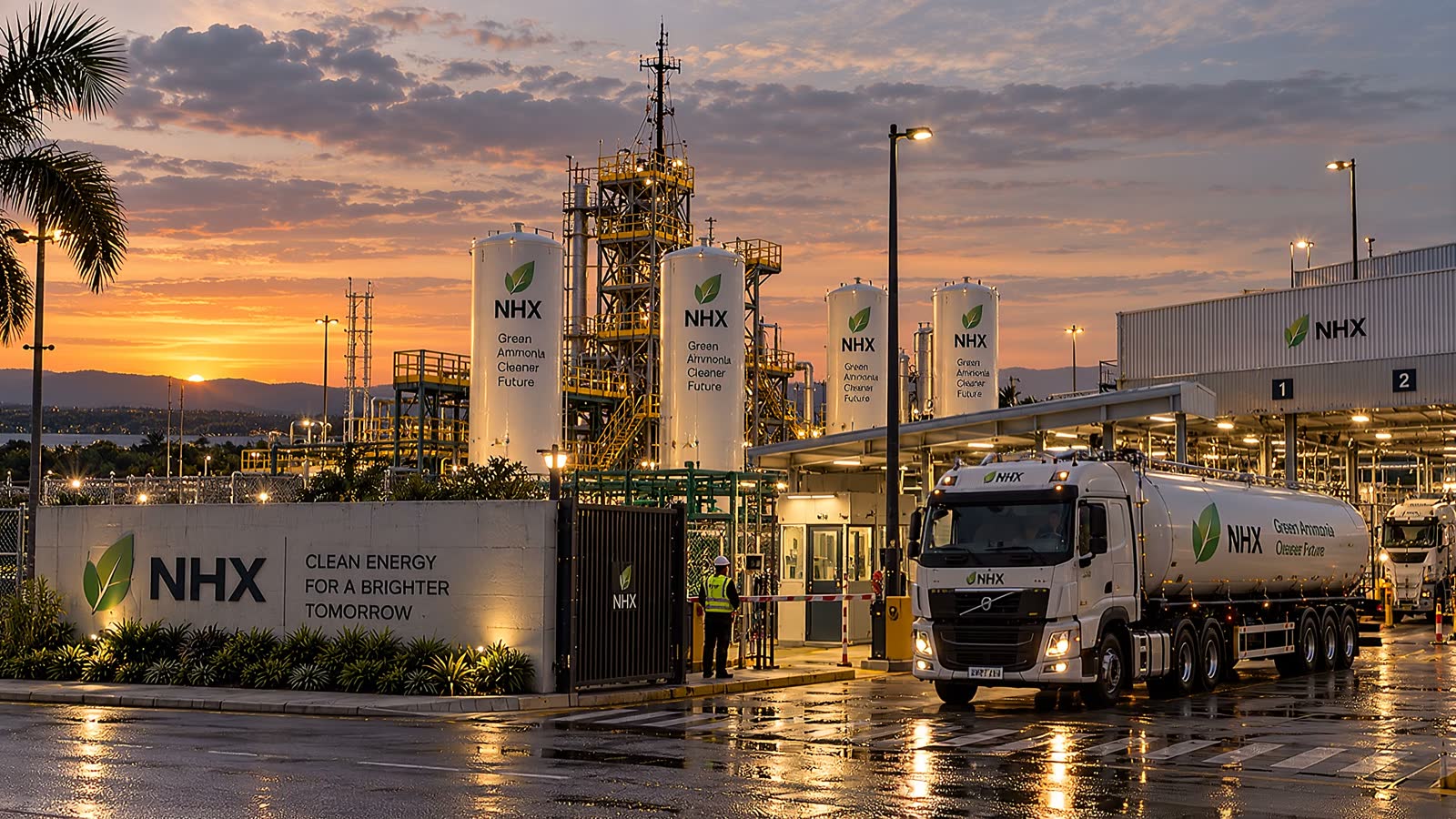
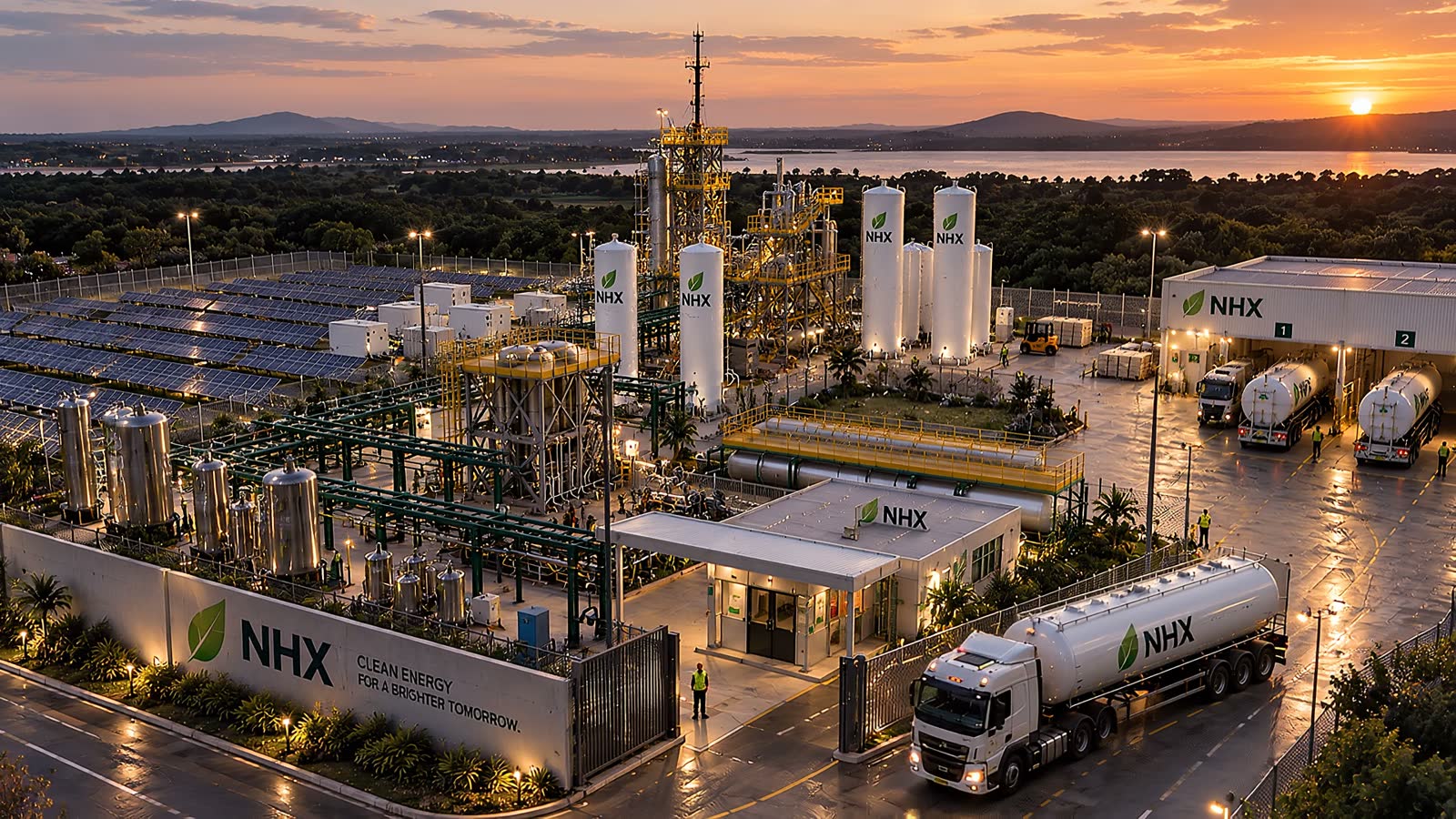
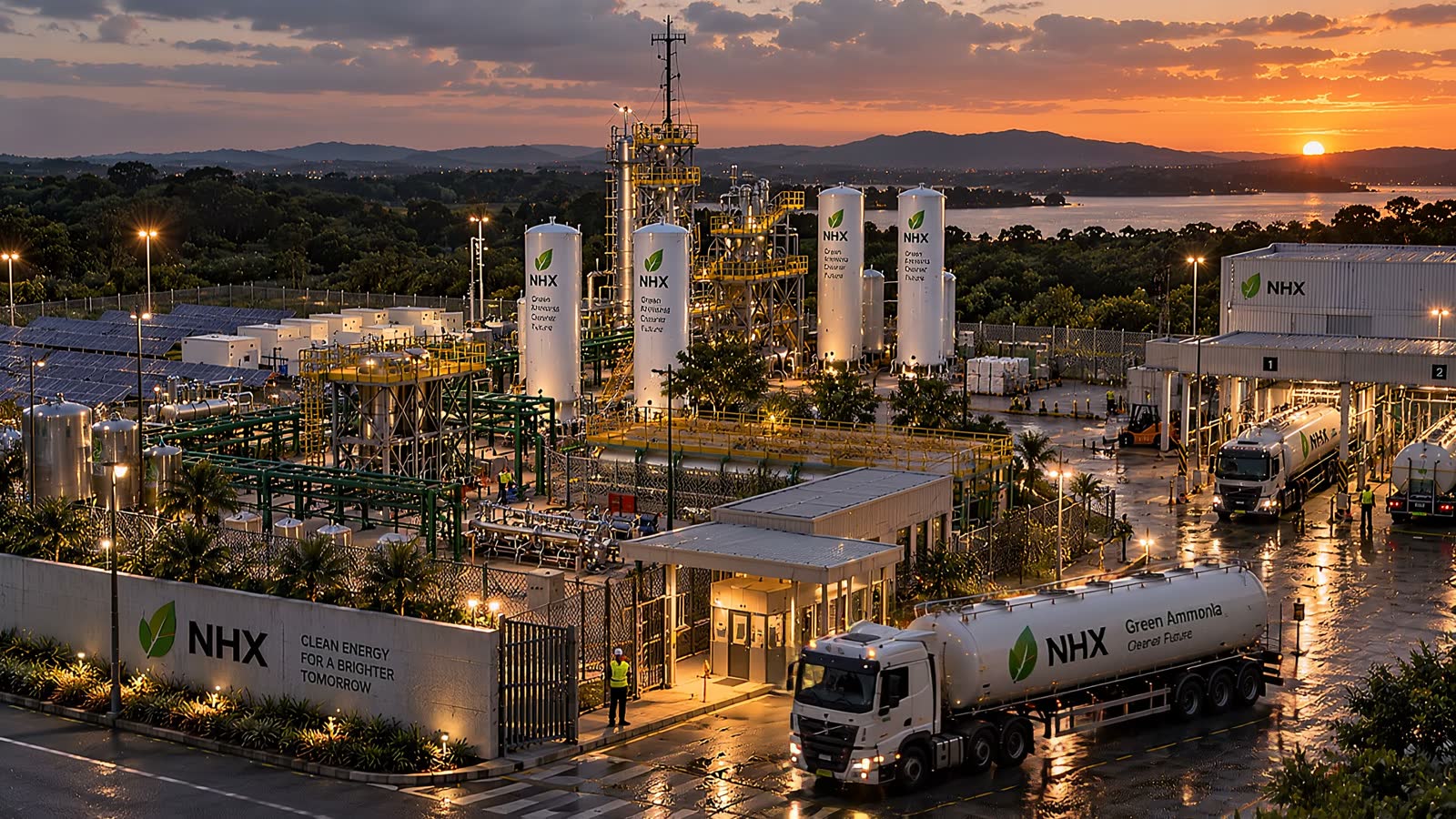
Rio Verde · Goiás · Conceptual project 2026
The ammonia that arrives by ship today can be produced next to the field. A modular green ammonia unit in Rio Verde, at the heart of Brazilian agribusiness.
Renewable energy · Measured carbon
Hydrogen from electrolysis powered by renewable energy, nitrogen from the air, ammonia synthesised on site. Carbon measured per tonne — not estimated.
Short chain · Predictable input
Producing next to the consumer shortens the chain of the input that decides the harvest: less exposure to ships, ports and the dollar.
*Target to be validated by life-cycle assessment.
The project
Ammonia is the base of the nitrogen fertilizers that sustain Brazilian agriculture, and today almost all of it arrives imported, made from natural gas with a heavy carbon footprint.
NHX Energia changes the origin and the distance. We produce hydrogen by electrolysis with renewable power, extract nitrogen from the air and synthesize green ammonia in a modular unit installed where the fertilizer is used. Less freight, more predictability, carbon measured per tonne.
Stock and specification defined per buyer, with protection against seasonality.
Aqueous ammonia at 19% and 29% NH₃, plus anhydrous ammonia.
Energy and emissions recorded per tonne produced.
Additional modules backed by contracts and margin, not promises.
How it works
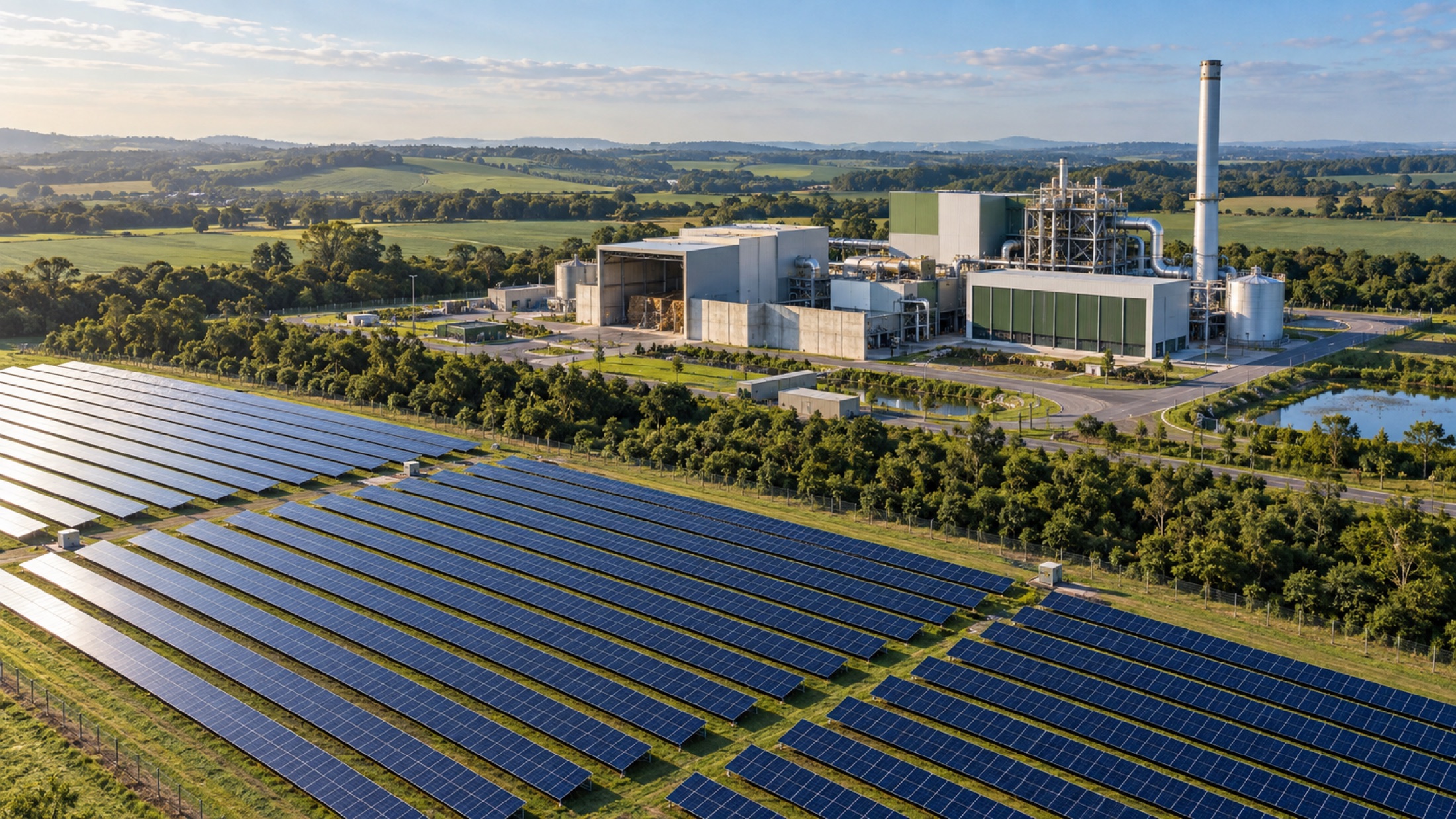
Solar power complemented by waste-to-energy generation and firm power contracts (PPA + grid): 50 to 55 GWh per year at nominal scale.
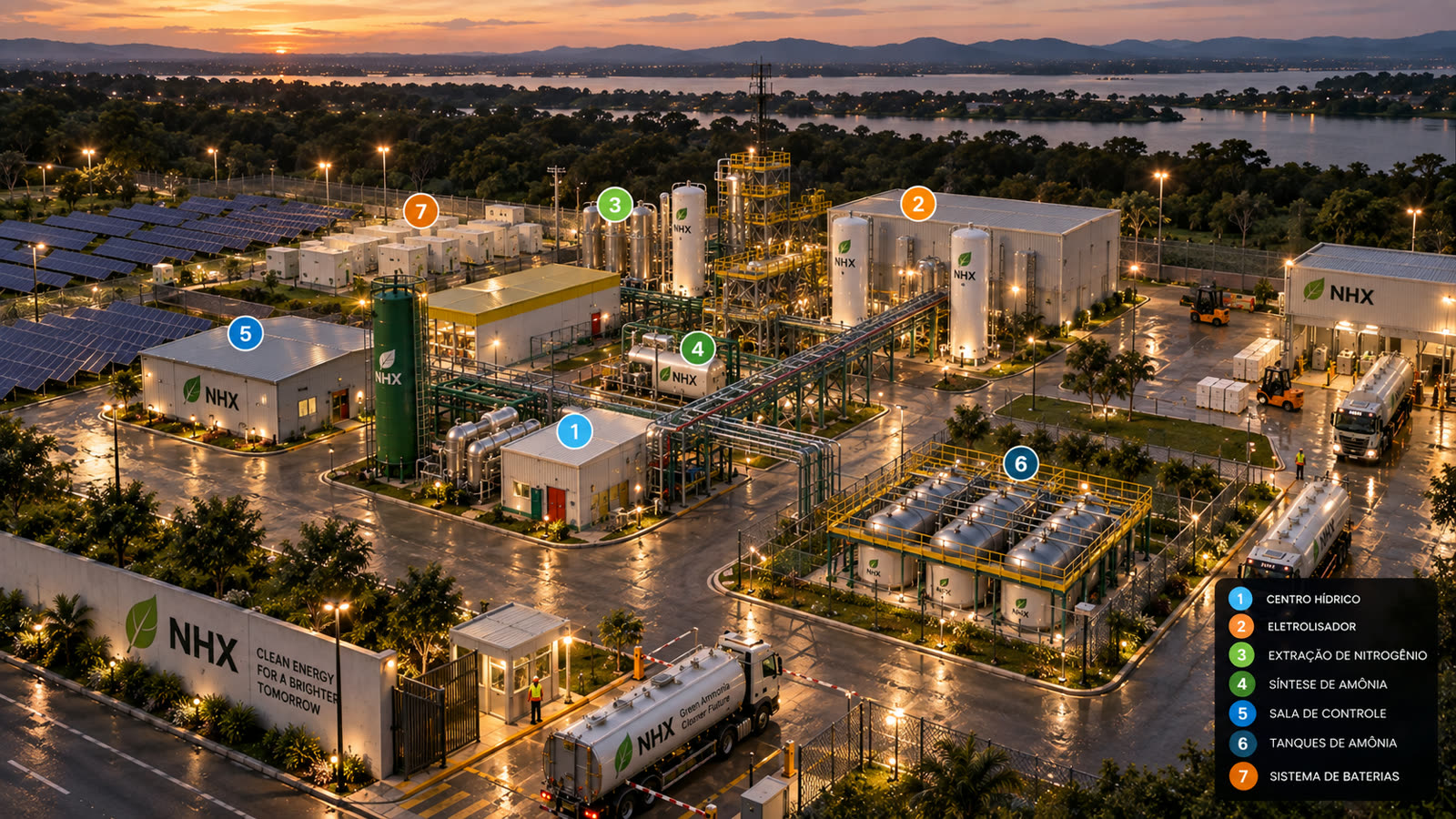
Clean electricity splits water into hydrogen and oxygen in the electrolyser. No fossil fuel.
Nitrogen extracted from the air meets hydrogen in the synthesis reactor and forms NH₃ with near-zero emissions.
AQUAMONIA (aqueous ammonia) and anhydrous ammonia go to the region's agricultural and industrial production.
NH₃ · H₂ · N₂
Hover or tap to locate it on the layout
Products
Aqueous ammonia in two concentrations, for fertilization and industrial processes. Plant target: 16,000 tonnes per year.
Nominal base of ~5,000 t/year for fertilizers, industrial refrigeration and chemicals. Specification and logistics per buyer.
Electrolytic hydrogen and clean energy, with carbon measured and traceable per tonne. Derivatives subject to dedicated studies.
Brazilian ammonia market
Regional supply depends on delivered cost and product acceptance. Producing a few kilometres from the field takes sea and road freight out of the equation and gives predictability back to the grower.
254 mil
tonnes of anhydrous ammonia imported by Brazil in 2023
Source: Infra S.A., Feb 2026, 2023 historical base
~2,504 to 3,821 t/year of nitrogen in the 19% and 29% NH₃ scenarios. Estimates proportional to the reference; alternative scenarios, areas not additive, doses to be validated.
Proposed location
A consolidated agro-industrial base, at the centre of fertilizer demand.
Impact
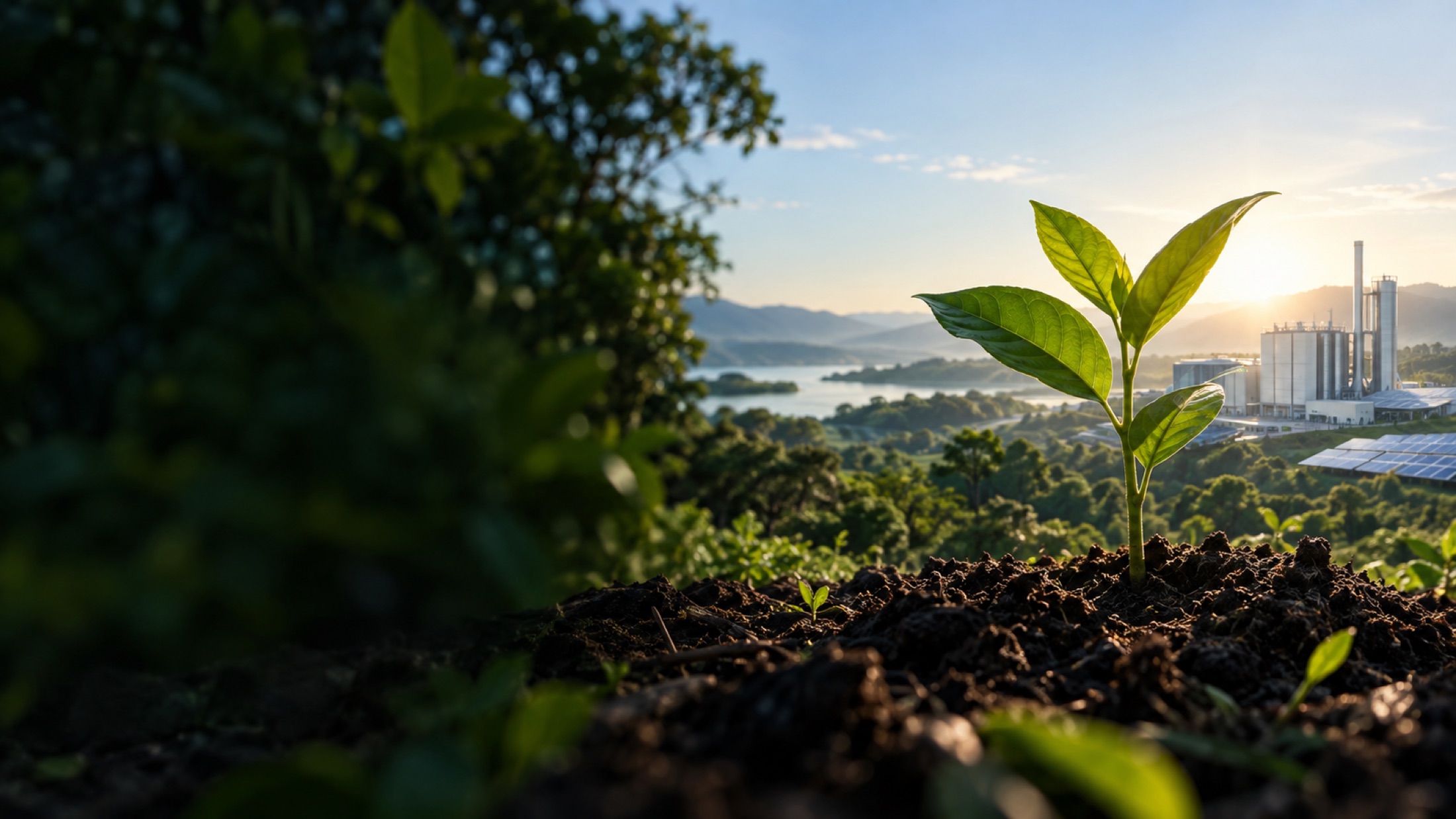
Technical training and operating data open to research. R&D lines in flexible operation, reliability, measured carbon and validated product.
Carbon, water and NH₃ losses monitored per tonne. Target of up to 99% GHG reduction versus the fossil route, to be validated by life-cycle assessment.
Jobs, local procurement and regional fertilizer supply at a predictable price.
99%
GHG emissions reduction
Impacts to be quantified. Emissions baseline and calculation boundaries to be defined.
Phased implementation
Progress conditioned on technical and commercial proof at each phase.
Demand, land, energy and engineering.
Establishment of the NH₃ plant and aqueous ammonia production.
Own production and acceptance tests with customers.
New modules and energy expansion.
01
Capital and financing.
02
Planning, engineering and permits.
03
Construction and start-up.
04
Quality and performance.
Team
Engineers, entrepreneurs and specialists in energy, chemistry and agribusiness, together to put Goiás on the green ammonia map.
Founder · Executive lead
Replace with one short sentence on background and role.
Process engineering
Replace with one short sentence.
Energy and infrastructure
Replace with one short sentence.
Agribusiness and commercial
Replace with one short sentence.
Partners and cooperation
UFPR · B2H2
Validation and training: balances and integration, testing and life cycle, researchers and operators. Cooperation to be formalized, with the B2H2 pilot plant as reference.
Offtake
Identified demand for the first unit, with product, use, concentration, volume, terms and contract under detailing.
Contact
Investors, buyers, technology suppliers, universities and public partners: we want to hear from you.
Or write tocontato@nhxenergia.com.br